Opening: When Teachers Become Learners Again
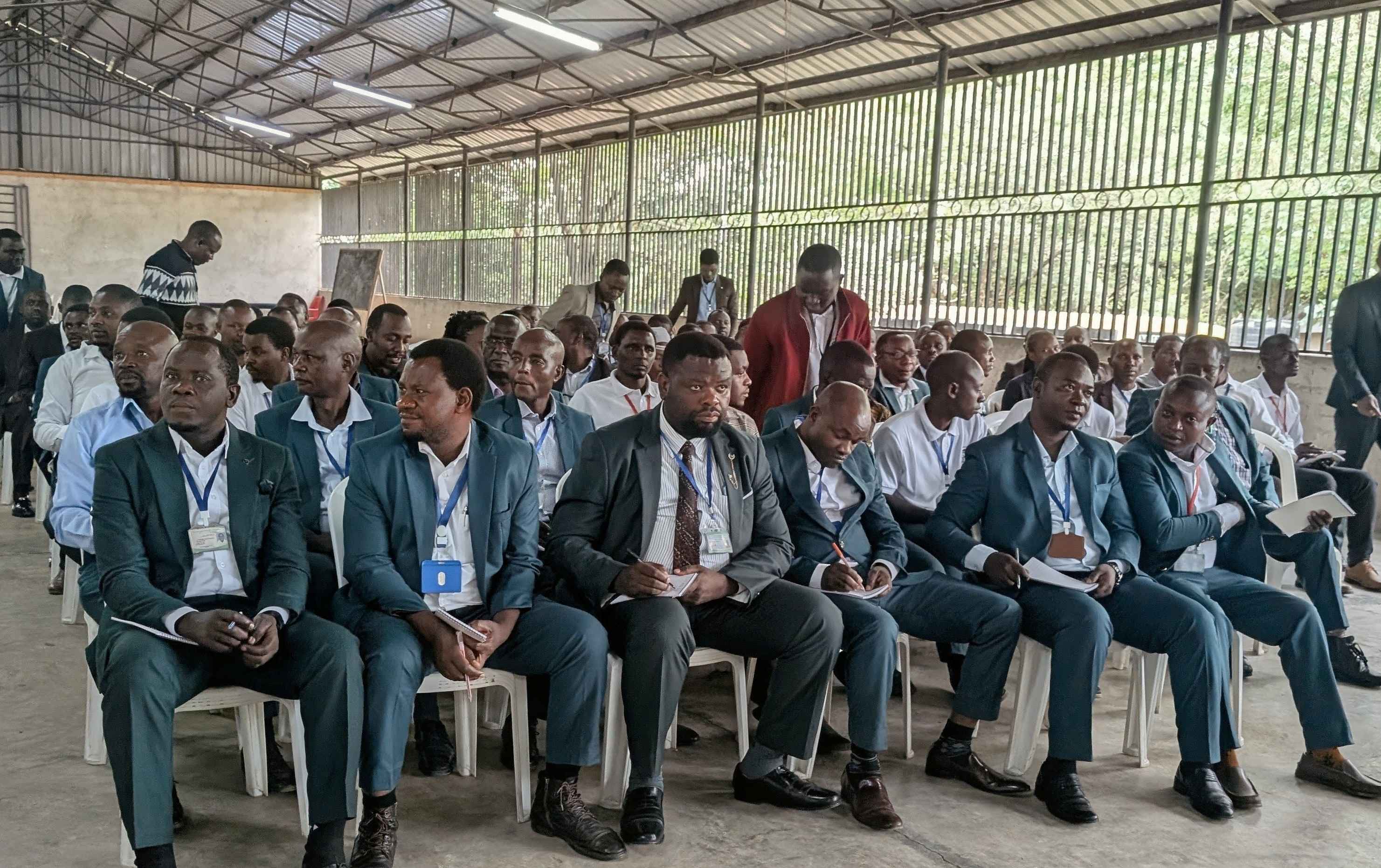
There is something powerful about a room full of educators sitting down — not to teach, but to be taught. On Day 1 of the Capacity Building Seminar held at the Musabe Girls' Dining Hall, Mwanza, teachers from both the primary and secondary sections gathered under one roof with one shared goal: to understand, embrace, and implement the New Teaching Curriculum effectively.
The session was facilitated by Mr. Peter Frank Lugumi, a curriculum expert and educator whose approach brought both clarity and energy to a topic that touches the heart of every classroom in Tanzania.
Why This Seminar Matters
Schools across Tanzania are navigating a significant shift — a curriculum reform that demands more than textbook adjustments. It requires teachers to rethink how they teach, not just what they teach. This seminar was Musabe Schools' deliberate response to that challenge.
The morning began with registration and a warm introduction of participants, followed by opening remarks that set the tone for a day of serious reflection and practical learning. From the very first session, it was clear — this was not a routine staff meeting. This was an investment in people.
Session One: Teachers' Code of Conduct — Five Pillars of Professional Responsibility
The first session of the day went straight to the foundation of teaching as a profession. Mr. Peter Frank Lugumi presented the Teachers' Code of Conducts — five clear commitments that every educator must carry into every classroom, every day.
a) Work for the Nation — A teacher's impact does not end at the school gate. Every student taught well is a citizen built well. Teaching is an act of national service.
b) Work for the Community — Schools do not exist in isolation. A good teacher understands the community surrounding the school and prepares students to serve and transform it.
c) Work for the Profession — Teaching is not just a job — it is a calling. Upholding its dignity, ethics, and standards is every teacher's personal responsibility.
d) Work for the Employer — Loyalty, punctuality, and professionalism toward the institution that trusts you is non-negotiable. A teacher who honors their employer honors the system of education itself.
e) Work for the Student — At the center of everything is the student. Every decision, every lesson, every correction should be made with the student's growth in mind.
The Qualities That Make a Teacher Effective
Alongside the code of conduct, the session highlighted the Qualities of a Good Teacher — a set of skills that separate a teacher who simply delivers content from one who truly transforms lives:
- Knowledge of the Subject Matter
- Knowledge of Students
- Knowledge of the Learning Process
- Knowledge of Instructional Strategies
- Knowledge of Motivational Skills
- Classroom Management Skills
- Assessment Strategies
- Technological Skills
These are not innate gifts — they are competencies that can be learned, practiced, and sharpened through exactly the kind of capacity building that Musabe Schools invested in on this day..
The Qualities That Make a Teacher Effective
Beyond the code of conduct, the session dug deeper into what separates a teacher who merely occupies a classroom from one who truly transforms it. An effective teacher, the facilitator emphasized, must develop and continuously sharpen the following skills:
Knowledge of the Subject Matter — You cannot pour from an empty cup. Mastery of your content is the starting point of every credible lesson.
Knowledge of Students — Every class is different. Understanding who your students are — their backgrounds, their challenges, their learning styles — shapes how you reach them.
Knowledge of the Learning Process — Teaching is not just talking. It requires understanding how the human mind receives, processes, and retains information.
Knowledge of Instructional Strategies — The best teachers have a toolkit of delivery methods and know when to use each one.
Knowledge of Motivational Skills — A student who is not motivated is a student who is not learning. Inspiring curiosity and effort is a skill — not a personality trait.
Classroom Management Skills — Order in the classroom is not about fear. It is about creating an environment where every student feels safe to learn.
Assessment Strategies — Knowing how to measure what students have actually understood — not just what they have memorized — is an art every teacher must develop.
Technological Skills — The modern classroom demands digital fluency. Teachers who embrace technology open doors that traditional methods alone cannot.
Things a Teacher Must Avoid
The facilitator was equally direct about the habits and attitudes that quietly destroy a teacher's effectiveness. These are not small things — they are career-defining blind spots:
- Being lazy — students notice, and they mirror it.
- Being careless — in preparation, in communication, in follow-through.
- Being egocentric — teaching is about the student, not the teacher's reputation.
- Being uncreative — delivering the same content the same way, year after year, is not teaching. It is repetition.
- Being disconnected from colleagues — isolation breeds stagnation. Professional relationships within the school matter.
- Being a drunkard — professional conduct does not end when school closes.
- Being pompous — arrogance closes the mind to growth and closes the door to students who need help.
- Using the same notes every year — the world is changing. Your lessons must change with it.
A Teacher's Portfolio: The Evidence of Professional Seriousness
One of the most practical sessions of the day focused on Teachers' Portfolios — the professional documents every teacher should maintain as a record of their work and accountability.
A portfolio is not bureaucracy. It is proof that a teacher is organized, prepared, and serious about their craft. According to the facilitator, every teacher's portfolio must include:
i. Attendance/List of Students — knowing who is in your class is the first act of responsibility toward every learner.
ii. Assessment Forms and Exams — a record of how you measured student understanding at every stage.
iii. Continuous Examination Reports — tracking student progress over time, not just at the end of term.
iv. Behavioral Report Letters — documentation of student conduct, essential for holistic student development and parental communication.
v. Teaching Aids — the tools and materials that bring your lessons to life beyond the blackboard.
vi. Lesson Notes, Lesson Plans, and Scheme of Work — the backbone of purposeful teaching. A teacher without a plan is preparing to fail.
vii. General Working Reports — an overall record of activities, performance, and outcomes within your teaching period.
viii. Other Teaching and Learning Materials — any additional resources that support the learning experience in your classroom.
A well-maintained portfolio tells a story — the story of a professional who shows up prepared, every single day.
Managerial Conflicts: The Hidden Enemy of School Progress
The seminar did not shy away from a difficult but necessary topic — Managerial Conflicts within school environments. These are misunderstandings between two or more parties that, left unaddressed, quietly damage teamwork, morale, and ultimately student outcomes.
The facilitator identified the key sources of conflict in school settings:
i. Competing Interest Groups — when individuals or departments prioritize personal agendas over institutional goals.
ii. Internal Relationships — personal relationships at the workplace, when poorly managed, can blur professional boundaries and breed tension.
iii. Laziness — one underperforming team member creates pressure, resentment, and conflict for everyone else.
iv. Fear of the Unknown — resistance to change — including curriculum reform — often stems from fear, not logic.
v. Tribalism and Nepotism — among the most destructive forces in any organization. Favoritism fractures trust and kills team spirit.
vi. Extravagancy — irresponsible use of school resources creates financial tension and institutional distrust.
Awareness is the first step to resolution. By naming these conflict sources openly, the seminar gave school leaders and teachers a common language to address what is often left unspoken.